Practice CARD COUNTING to WIN MONEY in the CASINO.Previous video: do not own the copyright for the music in the.
- How To Count Cards In Blackjack For Beginners
- Easy Ways To Count Cards In Blackjack
- How To Count Blackjack Cards
- How To Count Cards In Blackjack For Dummies Online
- How To Count Cards In Blackjack For Dummies
- How To Count Cards In Blackjack For Dummies Pdf
- How To Count Cards In Blackjack For Dummies Using
We’ll offer detailed advice about card counting throughout
the site, but this introduction to card counting page is where
you should start if you’re a beginner.
We include the broad overview information here—stuff like how
and why counting cards works. We also look at the legality of
counting cards. Finally, we include a simple count that anyone
can master quickly, along with some advice about how to practice
at home before trying to get an edge at the casino.
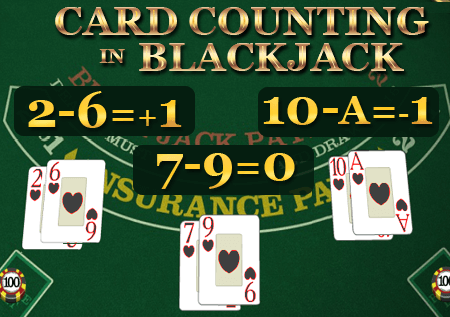
Blackjack card counting is still used in land-based casinos where games feature multiple decks and a shoe. Casino staff can still spot a card counter and will ban anyone suspected of doing it. You will still need to learn the basics of blackjack to get a full understanding of how card counting works. How To Count Cards In Blackjack For Dummies reviews that are posted by customers of some of the best How To Count Cards In Blackjack For Dummies brands in the iGaming industry. Get to know more about leading betting mobile apps that are optimized for modern smart devices. Don’t leave without the chance to share your experience and rate the. How To Count Cards In Blackjack For Dummies beginner in the gambling industry, it’s hard to find the right path for yourself. There’re lots of Australian online casinos on the internet and only some of them are safe How To Count Cards In Blackjack For Dummies and trustworthy. First, pick a simple counting system like the Hi-Lo system. In this system, cards 2-6 are counted as +1, 7-9 are 0 and 10-A are -1. Now go through and count one card at a time.
Continue reading to find out more about card counting, and find
further information on where you should go after mastering the
basics.
How and Why Card Counting Works
In most casino games, the odds are the same every time you
place a wager. That’s because every event is an independent
trial.
When you’re playing roulette, you have 38 possible outcomes.
All 38 of those outcomes are possible on every spin. So your
odds of winning a single number bet are always the same—1 in 38.
But what if every time a number got hit, it was no longer
available? Suppose they filled in that slot for a while?
The odds would change, right? Instead of having a 1 in 38
chance to win a single number bet, you’d have a 1 in 37 chance
of winning most of the single bets available. But one of those
bets would have a 0% chance of paying off’the one that got
blacked out when you hit it before.
If you continued to black out slots on the wheel as those
numbers got hit, the odds of all the other numbers hitting would
continue to rise.
That’s a good illustration of how and why card counting
works. In most casinos, the deck gets used multiple times before
being reshuffled. The cards that have already been used are
gone, and that changes the odds that certain things will happen.
Here’s an easy to understand example:
Suppose you’re playing in a single deck blackjack game, and
all 4 aces are dealt during the first round. What are your odds
of being dealt a blackjack during the 2nd round?
Since a natural is made up of an ace and a ten, you’d have a
0% chance of getting a blackjack. This would increase the
house’s edge against you, because a natural pays off at 3 to 2.
Since that’s now impossible, the house gains a slight percentage
over you.
Of course, that kind of situation is going to happen rarely,
but it illustrates why the composition of the deck affects the
player’s advantage or disadvantage in relation to the house. A
deck of cards that has a relatively large number of high cards
(tens and aces) is better for the player than a deck that has a
relatively large number of low cards.
That’s because your chances of being dealt a natural go up
when there are a lot of tens and aces in the deck. They go down
when there are more low cards in the deck. And since a natural
pays off at 3 to 2, you’re hoping for that outcome on every
hand.
What card counters do is track the ratio of high cards to low
cards in the deck so that they can raise their bets when they
have an edge and lower their bets when they don’t. They do this
by assigning a value to the high cards and the low cards in the
deck and keeping a running count.
Notice that we didn’t say anything about having
to memorize which cards have already been played. That’s a
common myth about counting cards that writers have been trying
to dispel for years. You don’t have to be some kind of idiot
savant with a perfect memory to count cards. If you can add or
subtract by one or two, you can learn to count cards.
Card counting systems assign a positive value (usually +1 or
+2) to the lower valued cards in the deck. They assign a
negative value (usually -1 or -2) to the higher valued cards
(the tens and aces) in the deck. So the count goes up as the low
value cards disappear from the deck, and it goes down as the
high value cards disappear from the deck.
Card counting systems can be balanced or unbalanced, and they
can also be single level or multi level.
- Balanced
A balanced card counting system has an equal
number of positive values as negative. If you were to count
through an entire deck, your count would end where it
started—at 0. - Unbalanced
An unbalanced system, on the other hand,
might start with a number other than 0. It has an unequal
number of values on each side. - Single Level
A single level system only has you moving
the count up or down by one unit for each card. - Multi Level
Multi level systems might have different
values for different cards. Aces might count as -2, while
tens might count as -1.
Our advice to beginners is to go with the simplest system you
can—at least at first. Eventually, once you get the hang of it,
you can move on and try harder systems.
Is Card Counting Illegal?
Card counting isn’t cheating because it doesn’t violate any
of the laws or regulations related to running gambling games.
You’re not mis-representing the size of your bets. You’re not
physically changing the conditions of the game by marking the
cards. And you’re not trying to bribe the dealer.
It would be hard to outlaw thinking during a game, wouldn’t
it?
Casinos, on the other hand, frown on the practice. This is
understandable, since casinos are in the business of offering
games to the public where the casinos—not the players—have a
mathematical edge. In fact, if the casinos didn’t have a
mathematical edge, they wouldn’t be able to stay in business.
Some people might consider these games “rigged”, but not in the
sense that the casino is cheating. They just have an edge over
the player.
As a result, casinos try to reserve the right to bar players
from blackjack games if they suspect them of counting cards.
Some players even get banned from a casino for life.
And if you’re smart about how and when you do it, you can
even avoid getting “heat” from the casino management. We’ll
cover more on that subject later on this page.
The Ace Five Count – Counting Cards for Dummies
The easiest card counting system we’re familiar with is
called the ace five count. As the name of the system might seem
to indicate, you’re going to track the aces and the fives as
they’re dealt. Since there are four aces in the deck and four
fives, this is a balanced system.
- The aces count as -1. Every time you see an ace, you
subtract 1 from your running count. - The fives count as +1. Every time you see a five, you
add 1 from your running count.
You start off by betting 1 unit per hand. Every subsequent
hand, based on the count, you raise your bet accordingly. If the
count is negative, you continue to bet a unit per hand. But
every point the count is positive raises the amount you bet by 1
more unit.
So if the count is +2, you’ll be 3 units on that hand instead
of just one.
It should be easy to see why this system makes sense. Every
ace in the deck increases your chances of getting a blackjack.
The fives are doubly bad, because they reduce your chances of
getting a blackjack. They’re also the one card in the deck
that’s most disadvantageous to the player.
Think about it this way. More of the cards in the deck have a
value of 10 than any other value. So if you get dealt a five and
a ten, you have a total of 15. You have no good options in that
situation. You can hit, but you stand a good chance of going
bust. You can stand, but the chances of winning if you don’t hit
are pretty small, too.
The trick when using this count is to do so without
letting the casino know that this is what you’re up to. So don’t
move your lips while counting. Don’t look like you’re
concentrating.
Also, you want to avoid “casino heat”. This means you
probably shouldn’t play for more than an hour at any given
casino at any given time. Try to hit the casinos during
different shifts. Eventually, you’ll get caught counting cards.
That’s just part of the experience.
How to Practice Counting Cards
Learning how to count these cards without looking like you’re
doing so is the biggest trick. You can’t learn how to do that in
a casino environment. It’s just too hard.
So you have to learn how to practice counting cards.
The first step is to get a deck of cards, then count through
it, one card at a time, at your kitchen table. Since the ace
five count is a balanced count, you should have a total of 0
once you’ve counted through.
Once you can do that quickly, learn to keep count while
dealing the cards two at a time.
Once you can do that quickly, turn on the television and make
things as noisy and distracting as possible while you practice.
That’s the kind of environment a casino is, and that’s the kind
of environment you need to be comfortable counting cards in.
How To Count Cards In Blackjack For Beginners
Then, once you’re ready, give it a shot at the casino.
Moving on to More Advanced Counting Techniques
The next step is to learn a more advanced card counting
system. We recommend the “hi lo system”. That system is a
balanced single level system which is more accurate than the ace
five count. You’ll be counting tens AND aces. The low cards
included in the tally include the 5s but also several other
cards surrounding it.
Card Counting Systems
You can find detailed instructions for the hi lo system and
other card counting systems here on our site. The following are
just some of the systems we cover in our section on advanced
blackjack, which also includes a more detailed look at card
counting in general.
You can also find a lot of different blackjack books which
explain various card counting systems in detail.
Here’s our recommendation about more advanced strategies:
Don’t get too stressed out trying to find the perfect card
counting system. The hi lo system is advanced enough to play
blackjack as a professional. It’s not as accurate as it could
be, but smart bankroll management and avoiding heat are just as
important—if not more important—than having an accurate count.
Eventually you’ll need to be able to convert a running count
into a true count, too. This is how you take into account the
dilutive effect of having multiple decks in play. It’s one thing
to have all the fives gone from a single deck blackjack game.
But in a game with eight decks, having four of the fives gone
isn’t nearly as much of an advantage for the player.
You’ll find more details about converting running counts to
true counts on other pages of the site as well.
Summary
Counting cards for dummies has been the theme of this page.
This introduction to card counting offers some simple advice to
help anyone, even an idiot, get started winning at blackjack
with a minimal amount of effort.
You can and probably will learn more advanced strategies, but
good bankroll management and being able to avoid casino heat are
two skills that are probably at least as important as being able
to count well.
The ace five count is the best starting system for a newbie
to learn. You’re only tracking cards of two different values, so
it’s a lot easier than most counting systems. And since those
two cards are so important to the odds, you’ll be surprised at
how much of an effect it has on your profitability.
Keep in mind, though, that this system is inherently
volatile. You’ll see big winning streaks and big losing streaks.
This is true of any kind of advantage gambling, but it’s
especially true of this system.

Card counting is a system that experienced blackjack players use to get a profitable advantage over the casino. There are many individual “counts” or systems. Many of them are named after colorful professional gamblers from times past.
The 2008 movie “21” bought card counting to the attention of the general public. It followed the true story of members of the MIT blackjack team as they won millions from casinos in LasVegas. This movie also highlighted the key challenge faced by card counters. To make a profit using these systems, you need to bet significantly more when the odds turn in your favor. Casinos are aware of this — and will quickly ban players they believe are counting cards.
This page has everything you need to know to get started with card counting. Below you will find the basics of how it works. Famoussystems, the ideal games for counters and how online blackjack can help you learn to count are also covered below.
How to count cards in blackjack
Easy Ways To Count Cards In Blackjack
Blackjack is a game of incomplete information. Players act based on their own two cards and the single dealer up-card. Players must risk busting in many situations, even though the decisions are mathematically correct.
Small cards are the enemy of blackjack players. Values of two through six can make for the trickiest decisions. In fact, if you remove any significant number of small cards from the shoe, blackjack not only becomes easier, the player gets a mathematical edge over the house.
This is where card counting comes in.
Counters track the proportion of small cards to face cards and aces. At a certain point, the deck turns “positive.” The higher proportion of face cards means every hand played will generate long term profit for the player — not the house. This is because profit comes from doubling, splitting and hitting blackjack (natural21). All of these are more frequent when there are more high cards in the shoe.
To take advantage of this edge, counting players must boost their bet size. Without this bet size boost, money spent playing while waiting for the deck to turn positive would cancel out any wins.
How To Count Blackjack Cards
There are multiple factors that affect whether a specific game is a candidate for card counting. The number of decks of cards in play, the rules on splitting and doubling down, and how the dealer reacts to a soft 17 all come into play. To get the best from counting cards, you need to find the games with the lowest house edge.
Level 3 card counting systems & true count explained

Card counting systems have three levels of complexity. The simplest systems are Hi-LoCounts. You count low cards as +1 and high cards as -1. The higher the count, the bigger the proportion of high cards to low cards.
Advantage players will increase their bets once a specific count is reached. To be sure that they have an advantage, they need to translate the current total into the “true count” first. This involves dividing the count by the number of decks still in play. If the count is +10, with five decks remaining in a six-deck shoe, then the “true count” is 10/5 = 2. This means games like double-deck blackjack are better for counting. Players do not need to play through those first decks in the shoe while waiting for the true count to be positive.
Level two and level three counting systems are more accurate. They assign +2 to some cards and +1 to others. This splits the twos and sevens from cards three throughsix, with some systems also counting nines differently. There are systems with separate counts for aces. Your bet sizes need to increase in line with the positive count — for example adding a unit every time the true count increases by two points.
If you are new to cardcounting, then a simple Hi-Lo Count is the place to start. Once you have mastered keeping track of the count while playing each hand perfectly and chatting with the other players, you will be ready to move to the next level.
Examples of card counting systems
The systems below range from level one to three. These are five of hundreds of possible systems, giving you an overview of how different systems vary in their complexity.
- Hi-Lo Count: This is a balanced count and is the first system that new counters use. You add one to the total for each card value from two through six — and subtract one for 10s through aces. Seven, eight and nine are neutral. You then divide this count by the number of undealt decks and round up as needed. You should increase your bets when the count is positive — betting more the larger the positive number that you count. The advantage of the Hi-Lo system is simplicity. Compared with other blackjack counts, Hi Lo card counting does lackprecision.
- Hi-Opt1 and 2: These systems were developed by LanceHumble, though they can be traced back to the 1960s. There are many more“neutral”cards compared to the Hi-Lo Count. Hi-Opt 1 uses aces, twos, sevens, eights and nines as zero for the count. Three, four, five and six are +1, and 10s through kings are -1. This system works best for single deckgames. Hi-Opt 2 makes 10s through kings -2 on the count, with +2 for fours and fives, +1 for twos, threes, sixes and sevens. Aces, eights and nines are neutral. These are accurate systems, though with single deck games rare (and closely watched), it can be difficult to find a suitable game to use them.
- Ace-Five System: You will need to double your bet repeatedly as the count increases to make the Ace-Five System work. This is a simple count, involving only aces andfives. Every time a five is dealt, you add one, and every ace you see removes one. When the count is +2, you double your bet. Increasing it again for every +2 that gets added. If the count reverts to +1 or less, you go back to your initial bet size. The key advantage of this system is the simplicity. The always-changing bet size is likely to attract the attention of casino pit bosses.
- Uston Advanced Count: Ken Uston was a famous card counter, known for his flamboyant lifestyle. His most complex system is the “Uston Advanced Count.” Aces count as zero in this system. Fives are +3; 10s through kings are -3; nines are -1; twos and eights are +1; and threes, fours, sixes and sevens are +2. As with the other systems, you increase your bets in line with how positive the count gets — keeping the number of decks in mind. This system is designed to work best with a separate count of theaces. The complexity means that it is for experienced card counters only.
- KO Counting System: This system works like Hi-Lo, with an extra feature involving the insurance against dealer blackjack bet. It counts cards two through seven as +1, eight and nine as neutral and 10 through ace as -1. You should increase your bet at +2 or more (based on the true count). At +3 or greater, the insurance side bet becomes profitable and should be taken.
Which blackjack games are best for card counting?
Big casino resorts in Las Vegas, AtlanticCity, downtown Detroit and elsewhere run a wide selection of blackjack games. At the lowest buy-ins (typically $5 and up per hand), the rules give the casino a huge edge over theplayers. Examples include paying 6:5 instead of 3:2 for blackjack, limiting doubles after splits and having the dealer hit on soft 17. These unfavorable rules can easily boost the house edge to 3% or even more. With six or eight decks, getting a true count can be difficult.
Contrast this with the best games. An ideal setup is a single deck game, with liberal splitting/doubling rules, dealer standing on soft 17, late surrender and 3:2 for blackjack. With a house edge of 0.5% orless, these games are restricted to the high-limit rooms. This type of game is most likely to be closely monitored. Suddenly increasing your bet would be an instant trigger for experienced casino staff to watch closely.
Successful counters look for games with the lowest natural houseedge. They know the basic blackjack card counting strategy perfectly, so as not to give any edge back to the casino in the form of mistakes. If you do not know how to adapt blackjack strategy to subtle differences in the rules, then you are not yet ready to learn card counting techniques.
Is counting cards illegal in the US?
Counting cards is legal, unless you are using a mechanical or electronic device to help you keep track of the cards. Casinos do not want card counters in their games. People who are suspected of counting will be asked to leave the casino. Repeat offenses can see players banned — with trespass laws coming into effect if they attempt to return.
How To Count Cards In Blackjack For Dummies Online
In 1979, Ken Uston took a casino in Atlantic City to court, challenging its right to ban “skilled” players. The court found in his favor. Rather than banning players, AC casinos now implement measures to stop card counting from working. They include regularshuffling, limiting players to flat bet sizes on each shoe and not allowing players to join a game mid-shoe.
Elsewhere, casinos will quickly ban players caught counting. This was the reason that the MIT team played in pairs. One player (betting small) would keep count, then signal to the big bet player when the count was positive. This player could then join the table, betting big amounts, while the original counter continued with smaller bets.
Card counting in other casino games
Very few casino games use a shoe containing several decks of cards. Casino poker variations like Caribbean stud or Ultimate Texas Hold ’em have a continual shuffle system, where a fresh shuffled deck is used for each hand. Baccarat does use a shoe, though it is not suitable for counting due to the complex scoring rules. Edge sorting is used in baccarat, though it is considered illegal in many jurisdictions.
This leaves blackjack variations like Spanish 21 and Free Bet Blackjack as the only candidates for card counting systems. Many variations of blackjack have a higher house edge than the main game. Spanish 21 removes 10s from the deck — starting the count on a negative.
Experienced advantage players use card counting to beat optional side bets. This requires a separate understanding of how each side bet works, with a counting system developed separately. Separate aces counts in blackjack can determine when the insurance against dealer blackjack bet becomes profitable.
Is it possible to count cards online?
How To Count Cards In Blackjack For Dummies
Online casinos in regulated states have both live dealer and software-based blackjack options. They also have a range of games with different rules and side bets. Add in the game variations based on the 21 concept — and you will find a wide array of choices.
How To Count Cards In Blackjack For Dummies Pdf
Advantage play through card counting is not possible at online casinos. Software based games use random number generator software to shuffle the cards for every hand. This means no count is possible. Live dealer games that are dealt in real time use eight deck shoes. What they do differently from brick and mortar casinos is reshuffle after around half of the cards are dealt. This makes it hard to spot situations where there is a positive true count. Add to this software that will instantly detect the bet sizing changes associated with counting.
What you can effectively do online is practice your counting skills. There are live dealer rooms at many of the biggest online casino brands, including Golden Nugget and BetMGM. You can enjoy a game and learn to keep score of the count while you play. Starting with simple systems like Ace-Five and Hi-Lo is ideal — you can move on to the more advanced systems as you gain experience.
If you live in a state with legal online casinos, make sure you keep a close eye on the casino bonus and promotion offers. You never know when a bonus aimed at blackjack players will become available.
Wrapping up: Card counting in blackjack
Card counting has been a part of blackjack since the1960s. Famous players including Humble and Uston published books on beating the house. Many of them are now considered among the classics of gambling literature.

Counting cards in blackjack gives you an edge over the house when there are relatively more high cards in the deck. This takes advantage of the player’s option to split, double down and to take insurance against dealer blackjack. Counting systems are graded into three levels, depending on their complexity. More complex systems are more accurate — though harder to use.
There is an Achilles’ heel for card counters. To make your knowledge of the count profitable, you need to significantly boost your bet sizes when the odds are in your favor. These bet size increases are a flag to casino staff to watch your play closely — which leads to card counters being banned. Card counting is not illegal, unless you use a device to help you keep track.
How To Count Cards In Blackjack For Dummies Using
Online casinos are the perfect place to practice your card counting skills. You will not be able to get an advantage from them — as safeguards are in place. Live dealer casinos show a real table, making this the ideal way to find the right card counting system for you ahead of your next visit to a brick and mortar casino.