This is the 4th annual Casino Party for Cincinnati's Mature adults. There will be lots of great food, beverage people and entertainment. The Vinewood Casino, also known as Be Lucky: Los Santos, is a casino appearing in Grand Theft Auto V and formerly in Grand Theft Auto Online, located onVinewood Park Drive in East Vinewood, Los Santos, overlooking the Vinewood Racetrack. On July 23, 2019, it was replaced by The Diamond Casino & Resort, as part of The Diamond Casino & Resort update for Grand Theft Auto Online. 1 Description 1.1. Endor has the only casino in this game. Poker is still probably the best way to get tokens, because of the high/low game. After each winning hand you will have the opportunity to play a high/low game for double or nothing. The max bet has been reduced to 10 in this version of the game, and the cap is set at 10,000 tokens per hand, but overall. Las Vegas Sands Corporation is an American casino and resort company based in Paradise, Nevada, United States.Its resorts feature accommodations, gambling and entertainment, convention and exhibition facilities, restaurants and clubs, as well as an art and science museum in Singapore. In partnership with thousands of public safety agencies, Everbridge offers the most trusted information available at a neighborhood level to keep residents informed - all delivered directly to your mobile device. Messages range from emergencies and crime advisories to important announcements, reminders and community updates. You can also connect with your employer or university to receive.
Coordinates: 41°54′15″N012°27′09″E / 41.90417°N 12.45250°E

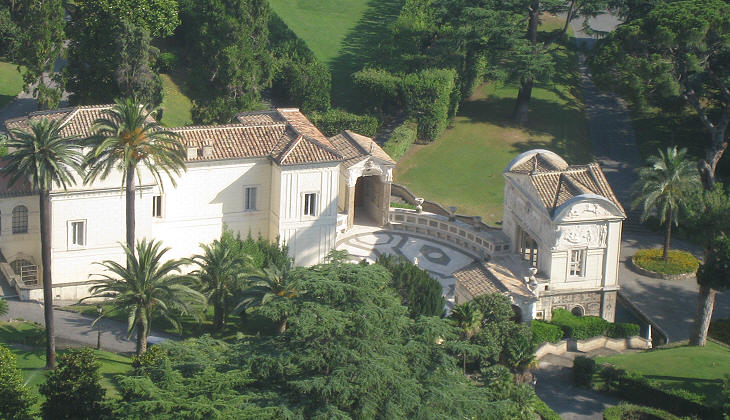

The Casina Pio IV (or Villa Pia) is a patrician villa in Vatican City which is now home to the Pontifical Academy of Sciences, the Pontifical Academy of Social Sciences and the Pontifical Academy of St. Thomas Aquinas. The predecessor of the present complex structure was begun in the spring of 1558 by Pope Paul IV in the Vatican Gardens, west of the Cortile del Belvedere. Paul IV commissioned the initial project of the 'Casina del Boschetto', as it was originally called, from an unknown architect; the first mention of the single-storey building can be found on 30 April 1558, and a notice of the following 6 May, says that the Pope spent 'two thirds of his time at the Belvedere, where he has begun to build a fountain in the woods'.
Upon Paul IV's death on 18 August 1559, Pope Pius IV took on the project, which had not yet been completed, and, turning to Pirro Ligorio, improved it. The complex, as it was completed in 1562, comprised an elliptical cortile, two free-standing portals, and the loggia with its fountain. Rich sculptural stuccos, once supplemented by some fifty ancient Roman sculptures, enliven the exterior (illustration).[1] A team of at least six major painters, including Federico Barocci, Federico Zuccari, and Santi di Tito and their assistants, frescoed the interiors.[2]
The Casina's rich and at times obscure iconographic programme, of the efficacy of baptism, the primacy of the papacy and the welcomed punitive powers of the Church,[3] seems to have been inspired by CardinalCharles Borromeo, nephew of Pius IV, who probably had it in mind as the headquarters for the Academy he was about to found, on 20 April 1562, called Accademia Noctes Vaticanae. Graham Smith[2] suggests that the interrelated iconography of the interior frescoes was inspired by Cardinal Marcantonio da Mula.
Pope Pius XI, the founder of the current Pontifical Academy of Sciences, made the Casina the Academy's current headquarters in 1936.
See also[edit]
Citations[edit]
- ^They are not just as Pirro Ligorio designed them; Graham Smith, The Casino of Pius IV, Princeton, N.J., Princeton University Press, 1977, documents 17th-century restorations, replacements in 1824 and major renovations in 1931–35.
- ^ abSmith 1977.
- ^As examined by Smith 1977.
_(cropped).jpg/250px-Trump_Tower_(7181836700)_(cropped).jpg "Casinoni")
General references[edit]
- Friedländer, Walter (1912). Das Kasino Pius des Vierten. Kunstgeschichtlichen forschungen, 3. Leipzig: Karl W. Hierseman. OCLC803230407. The first modern monograph based on documentation.
- Losito, Maria (2010). The Casina Pio IV in the Vatican. Translated by Gabriella Clare Marino. Vatican City: Pontificia Academia Scientiarum. ISBN978-88-7761-099-7. OCLC955239788.
- Smith, Graham (1977). The Casino of Pius IV. Princeton, N.J.: Princeton University Press. ISBN9780691039152. OCLC983924623.
- Partridge, Loren W. (June 1978). 'Review: [Untitled]'. The Art Bulletin. 60 (2): 369–372. doi:10.2307/3049799. JSTOR3049799. An extended critical review, analyzing the iconographic program in detail.
Gta Iv Casino
External links[edit]
- Media related to Casino di Pio IV at Wikimedia Commons